Exchange for more BETs
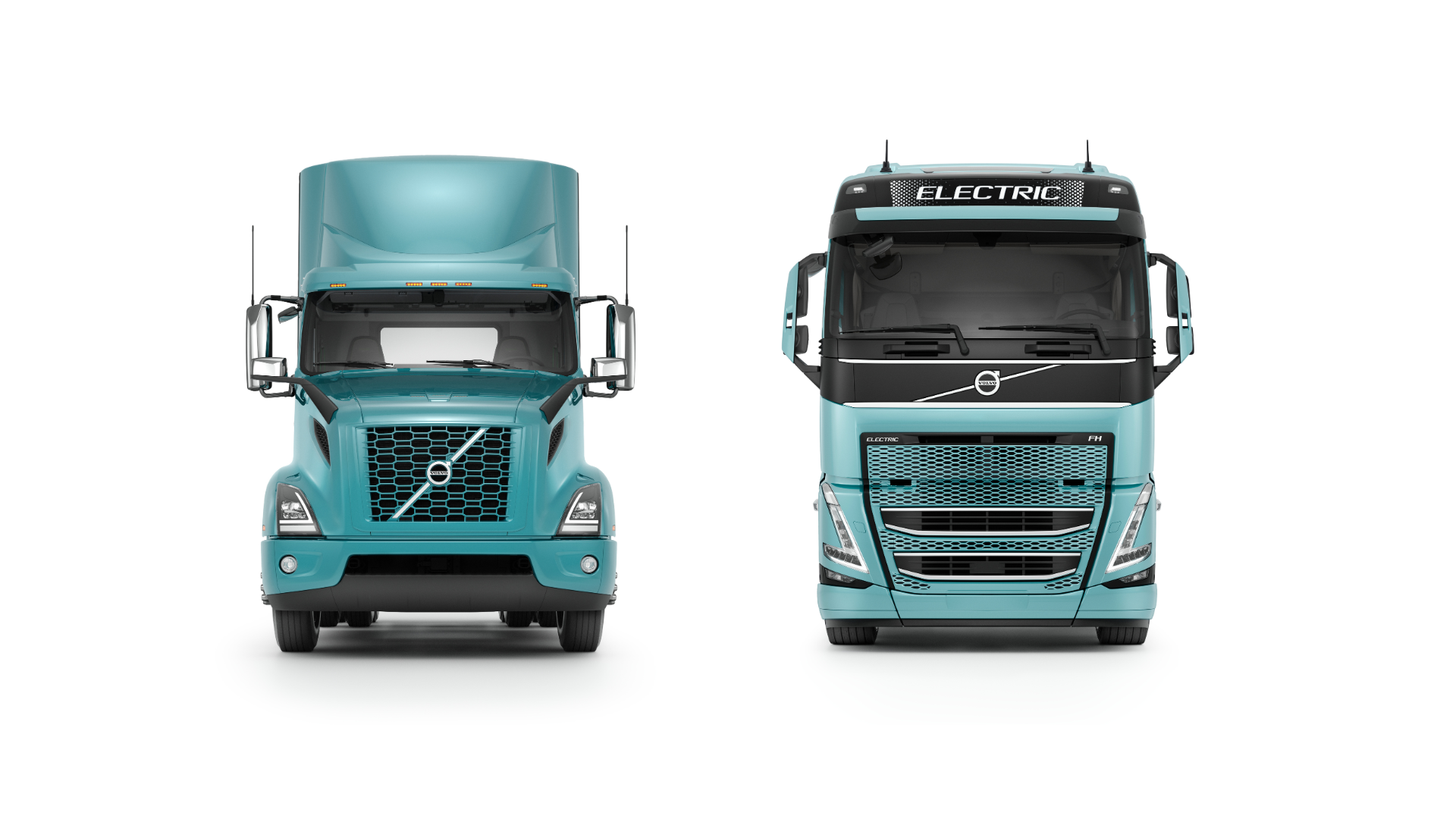
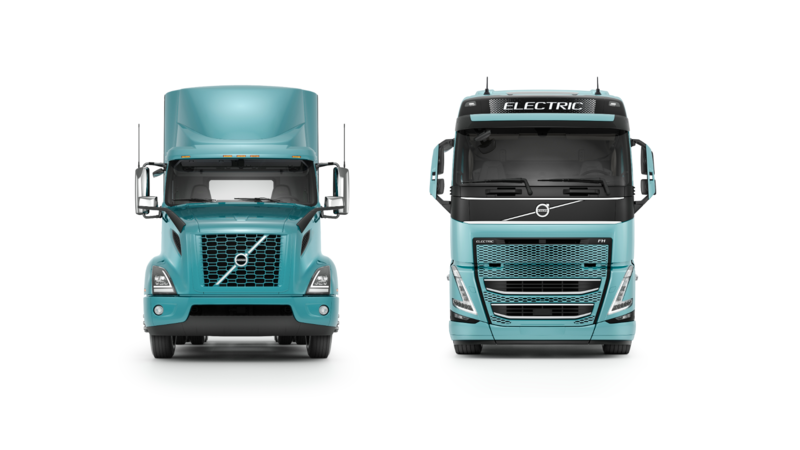
Picture of Two green Volvo trucks against a white background

Zero-emission trucks have long promised lower operational costs and a reduced carbon footprint, but industry leaders and academics require more than theoretical benefits; they require quantified, real-world proof. The completed "Exchange for more BETs" project, a transatlantic collaboration between Sweden and the United States, was established to provide exactly that. By analyzing live operational data from early adopters, the initiative confirmed that battery electric trucks (BETs) match or exceed diesel reliability, demonstrating minimal downtime and negligible battery degradation even under demanding conditions. Crucially, the project revealed that while the Total Cost of Ownership (TCO) for local distribution still relies on subsidies to close a 10% gap, electric line-haul operations—when combined with strategic depot charging—have already achieved cost parity with diesel.

The transition to zero-emission logistics is a global challenge. While the market for electric heavy-duty vehicles is young, both Sweden and the United States positioned themselves at the forefront of this technological shift.

Both CALSTART and Lindholmen Science Park have been involved in many early deployments seeking to study how these vehicles perform in real-world fleet operations. Researching the results of past and current deployments and presenting the learnings from each country will help speed the transition to zero-emission trucks and the growth of clean transportation in general. 

Led by CALSTART in the US and Lindholmen Science Park in Sweden, the project facilitated cross-border knowledge sharing from 2023 to 2025. By analyzing extensive real-world deployments—including Sweden's REEL project, which deployed 70 electric trucks ranging from 16 to 74 metric tons across varied applications—the initiative successfully mapped operational strategies, infrastructure solutions, and the policy requirements necessary to accelerate the shift away from fossil fuels.

Picture of Two green Volvo trucks against a white background

What was the project goal? 


The project goal was for Sweden and the United States to share knowledge and learn from each other’s experience in the early development of the zero-emission truck market.


The project set out to identify successful deployments, operational strategies, and policies that worked in both countries in various logistic applications.

Results and Insights

The data collected from operators running vehicles in conditions ranging from urban distribution to heavy timber transport and long-haul logistics provided several definitive insights.

Operational Reliability and Performance

The physical performance of the trucks is no longer a limiting factor. The project tracked vehicles operating in demanding climates, including northern Sweden where temperatures drop to -30°C.

  • High Uptime: Most prototype and early-production electric trucks were out of operation for an average of only five days per year over a three-year period.
  • Battery Longevity: One notable vehicle in the project logged over 500,000 miles in a two-shift configuration between Gothenburg and Helsingborg, demonstrating no significant battery degradation despite heavy daily utilization.
  • Operational Efficiency: The majority of transport companies reported that their overall logistical efficiency was unaffected. In some urban cases, operators successfully extended delivery windows into the night due to the quiet nature of the electric drivetrains.

The Economics of Electrification (TCO)

The shift to electric fleets requires transitioning from an OPEX-heavy business model to a CAPEX-heavy one, driving haulers to negotiate longer transport contracts (shifting from two years to up to five years) to balance the initial investment risk. The Total Cost of Ownership is highly sensitive to how and where trucks are charged, as well as the availability of state subsidies.

  • Local and Regional Distribution: With state subsidies applied to both the vehicle and infrastructure, the TCO gap is approximately 10% to 11% higher than diesel. Without subsidies, this gap widens to roughly 20%.
  • Line Haul: When operating on longer routes and utilizing subsidies, the TCO for electric trucks is actually 1% cheaper than diesel, reaching true cost parity. Without subsidies, it is only 3% to 5% more expensive.
  • Maintenance: Contrary to the assumption that EVs immediately slash maintenance costs, early deployment costs have remained relatively flat. While 25% of operators achieved lower maintenance costs, another 10% saw an increase, driven largely by the mandatory "gold service contracts" required by OEMs and the costs associated with reskilling workshop personnel.

Infrastructure Strategy is Critical

Control over charging infrastructure is the primary lever for a successful business case.

  • Depot Charging is Essential: Relying entirely on public charging destroys the economic viability of electric trucks. Because public infrastructure pricing is currently aligned with passenger car rates, utilizing 100% public charging pushes the TCO to roughly 32% higher than diesel.
  • Grid Independence: To secure predictable energy costs, multiple operators are investing in localized energy production. Approximately 15% of the studied operators have connected solar power directly to their charging infrastructure, and a growing number are planning to integrate battery energy storage systems (BESS)—potentially utilizing second-life batteries retired from the trucks themselves.

The Impact of Policy

The data proves that policy acts as the ultimate catalyst or bottleneck. During the project, Sweden reduced its renewable fuel mandate from 26% to 6%. This sudden policy shift drastically lowered the cost of diesel, temporarily weakening the immediate economic case for electric adoption in the country compared to nations like Germany or Norway. However, upcoming European mandates—such as CO2-differentiated road tolls and the Emissions Trading System (ETS) for transport—are projected to firmly tip the economic scales permanently in favor of electric trucks by increasing the operational cost of diesel alternatives.

Project manager: Andreas Josefsson, Nikita Zaiko, Lindholmen Science Park AB and Chase LeCroy, Kevin Leong, Calstart

Parties: Lindholmen Science Park AB, CALSTART

Period: 2023 to 2025

Man talking to the camera at an event, people mingling in the bakground

US-Sweden collaboration for zero emission trucks

2024-04-22
Exchange for more BETs is a Future Mobility-funded project and collaborative effort between Sweden and the United States. The project goal is to have actors in Sweden and the United States share...

Explore your opportunities 

Man smiling into the camera

Hans Pohl

Future Mobility
Program Director
hans.pohl@lindholmen.se
+46(0)70-840 27 40
The San Fransisco bridge with the sun setting in the background. Beautiful lighted clouds in yellow gives a hopeful tone to the picture

What we offer actors in Sweden

Collaboration with the United States can deliver innovations that would not be possible to obtain otherwise. Collaboration with the United States can deliver innovations that would not be possible to...
Bus drivers through sunny fields

What we offer actors in the United States

Sweden is very active in the development and use of greener vehicles and fuels. It has a strong public transport system, high sustainability ambitions and is considered among the most innovative...

Our innovation projects 

Woman standing with a bike on a dark trainstation

A Design Framework for Women-Centered Mobility Hub
In this innovation project the Shared-Use Mobility Center (SUMC) teamed up with Living Cities and Communities (LCC) to develop a Mobility Hubs Design Framework for Women and Caregivers. Access the...
electric car

Advancing mobility through sustainable, robust, and innovative battery technology

The project aims to revolutionize sustainable mobility by collaborating to develop advanced battery technologies with enhanced energy density, faster charging capabilities, and improved life cycles.
Car riding on the street, analyzes the environment digitally

AI Aware

In the AI Aware project series, a collaborative cloud approach has been researched to enable increased awareness of vehicles. The recent AI Aware project used the radical developments that have...
A electric car being charged

Bridging Technology and Sustainability for California’s Electric Vehicle Owners

CommuteSaver, a Swedish cleantech startup, is joining forces with Capgemini Applied Innovation Exchange (AIE) in San Francisco to unlock the untapped potential of California’s Low Carbon Fuel Standard...
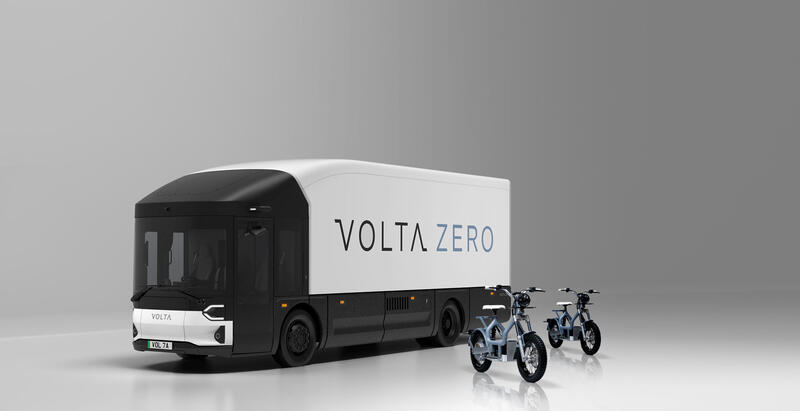
Truck and electical mopeds

Carbon free zone for transportation of goods in San José

Through a Swedish consortium of companies all within emission-free transportation, the project intends to show how the city of San José can practically realize becoming a climate-neutral city by the...
illustration of the cocoon airbag

Cocoon

Cocoon is an advanced safety platform designed to protect the most vulnerable road users i.e. children in bike seats. While traditional helmets offer basic protection, Cocoon introduces a...
A road from above, cars driving in it.

CyberMAP

Cyber-physical Multi-factor Authentication-based Positioning for Autonomous Vehicles
Four men standing and talking!

Dashboards for Decision Support in Highway Congestion Management

Congestion is a growing problem in cities across Sweden and the United States, leading to increased travel times, fuel consumption, and emissions. To address this, researchers from Linköping...
A hand is pointing at a visualization dashboard

Data-Driven Urban Mobility Assessment for Applications in Sweden and the USA

Modern cities are turning to Sustainable Urban Mobility Plans (SUMPs) to tackle traffic and pollution, but these plans are often hindered by fragmented data and rigid, outdated simulation models. This...
Three cars on the highway, a contected cloud is illustrated on the highway

Decentralized AI to Optimize Battery Performance, Lifetime, and Safety

This collaboration between Cognivity AI Sweden AB and California-based Luxury EV Manufacturer explores the transition from static, rule-based battery management software to adaptive, AI-driven models...
A picture of a instrument inside the cockpit of a large ship during night time

ElectriSea

ElectriSea is a Sweden–USA collaboration between Cetasol and Glosten Naval Architects, accelerating the transition to zero-emission ferries. By developing a digital twin tool that integrates real-time...
Picture of Two green Volvo trucks against a white background

Exchange for more BETs

The project goal is to have Sweden and the United States share knowledge and learn from each other’s experience with the early development of the zero-emission truck market.
School bus is driving on a street

Harvesting Road Data with Connected, Electric School Buses

The Future Mobility-funded strategic project, Harvesting Road Data with Connected, Electric School Buses brings together Univrses from Sweden and Highland Fleets from the USA in a collaborative effort...
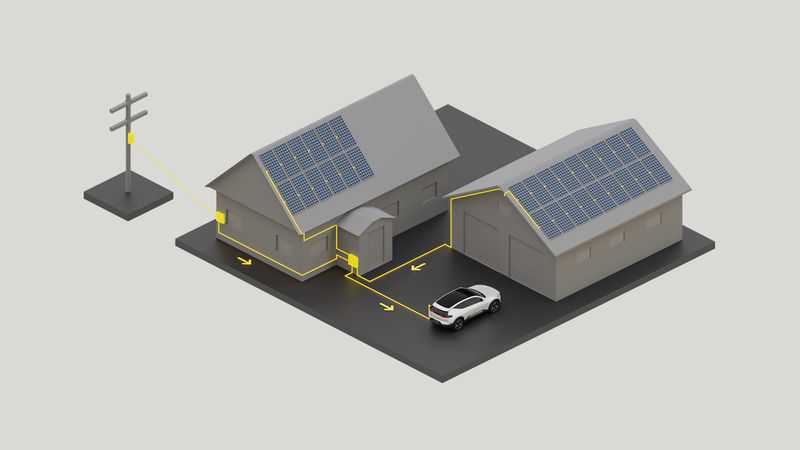
Illustration of house with solar panels and a car on the drive way which is connected to the power

Implementation Roadmap for Swedish Automotive Vehicle-to-Grid Services in California

As electric vehicles grow in number, the question of how to balance energy demand and supply becomes critical. This project, led by Polestar with support from Future Mobility, explored the potential...
illustration of in motion charging

In-Motion Charging on the Pennsylvania Turnpike

Road transport contributed 23% of all United States greenhouse gas (GHG) emissions in 2022 and emissions are not decreasing. Electric Road Systems (ERS) make electrification easier by supplying energy...
Road from above in sunset

JustFuture

This project aims to explore the role of on-demand transit in different contexts and assess its future possibilities for public mobility with a special focus on issues of transport equity and equality...
Two white Robotaxis on trafficated street, blue sky and brick buildings.

Learning for Deployment of Robotaxis at Scale

As the global race to deploy automated vehicles in urban environments accelerates, the project "Learning for Deployment of Robotaxis at Scale" identified key lessons that can inform future...
Image of a echo secured room

Methods for Testing Automotive Radar Interference (MeTARI)

This collaboration between Radar Reticence, Halmstad University, Michigan Tech Research Institute (MTRI), and Dynamic Research Inc. (DRI) aims to develop and demonstrate the first harmonized method...
A road, data is visualized on the road

Road Condition Data

In this research and innovation project, Klimator, a leader in applied road climatology, is working to adapt its condition models to the challenges of the United States. By partnering with the...
Illustration of a mobility hub

San Fernando Street Mobility Hubs - Community Engagement Strategy

While mobility hubs are gaining traction worldwide, San José is in the planning stages of establishing such integrated systems. This project focuses on developing a comprehensive community engagement...
A hydrogen station on the side of the road close to the woods

SENITH

SENITH is a strategic collaboration between Chalmers University of Technology and the University of California, Davis. The project connects academia, industry, and public agencies in Sweden and...
Technology screen is cool lighted in a futuristic setting which seems to be a studio

Shared Standards for Shared Mobility

Given the digitalization of shared mobility, the need for participating actors to collaborate around central digital technologies increases. One aim of the project is to facilitate knowledge exchange...
Several trucks on the road

Smart Solar-Powered Charging Rails for Next-Generation Heavy-Duty Electric Mobility

In this collaboration between the Swedish National Road and Transport Research Institute (VTI) and the University of Texas at San Antonio, this project supported by Future Mobility explores the...
Roads crossing, the street lamps are in purpule which gives a futuristic look

Streetmeter

The Streetmeter project has successfully concluded, delivering an innovative analysis tool designed to transform car-dominated urban spaces into vibrant, human-centered streets. This research and...